Crawl space encapsulation typically costs $1,500 to $15,000, and two of the guides we read put the national average at about $5,500. Per square foot, published rates run from $2 to $10: This Old House gives $3 to $7 for a basic job and up to $10 where moisture problems are serious, Fixr gives $2 to $6, and one aggregator gives $3 to $10. For a 1,000-square-foot crawl space that works out to roughly $3,000 to $7,000 by This Old House’s numbers. The spread comes from size, how wet the space is now, and whether the price includes a dehumidifier, drainage, insulation and cleanup.
The published ranges side by side
The guides agree on the overall shape but not the edges. HomeGrail says a 1,000-square-foot space without a sump pump or dehumidifier can come in as low as $2,500, and that spaces over 2,000 square feet with add-ons can reach $15,000 or more. Fixr, figuring a 1,500-square-foot crawl space, gives $2,000 to $15,000.
Crawl space encapsulation: whole-job ranges
Select a column heading to sort. National ranges, not quotes.
| Unit | ||||
|---|---|---|---|---|
| Crawl space encapsulation, whole job | $1,500 | $15,000 | per project | This Old House — Crawl space encapsulation cost · updated Mar 2026 · read Nov 2026 |
| Crawl space encapsulation (large homes can run higher) | $1,500 | $10,000 | per project | HomeGrail — Crawl space encapsulation cost · updated Jan 2026 · read Nov 2026 |
| Crawl space encapsulation, 1,500 sq ft basis | $2,000 | $15,000 | per project | Fixr — Crawl space repair cost · updated Jan 2025 · read Nov 2026 |
Because most of the price scales with area, the per-square-foot rates are the quickest way to sanity-check a quote. Slide to your crawl space’s floor area.
Price encapsulation for your crawl space
Each row multiplies one guide's per-square-foot range by your floor area. Wall area is not counted separately.
- Encapsulation, basic job (up to $10 with serious moisture)$3–$7 per sq ftThis Old House — Crawl space encapsulation cost · updated Mar 2026 · read Nov 2026
- Encapsulation$2–$6 per sq ftFixr — Crawl space repair cost · updated Jan 2025 · read Nov 2026
- Encapsulation (aggregator)$3–$10 per sq ft One sourceThePricer — How much does a crawl space vapor barrier cost? · updated Oct 2026 · read Nov 2026
Encapsulation cost by crawl space size
Quotes are easiest to judge against a fixed size. The table below takes the three per-square-foot ranges above and multiplies each by 400, 1,000, 1,500 and 2,000 square feet of floor; the last column runs from the smallest rate of the three to the largest. It is our arithmetic on the guides’ rates, not a separate source.
Crawl space encapsulation cost at four sizes
Floor area times each guide's per-square-foot range. Liner, sealing and labor only; fixed add-ons are extra.
| Size | This Old House$3–$7 per sq ft | Fixr$2–$6 per sq ft | ThePricer$3–$10 per sq ft · one source | All guides$2–$10 per sq ft |
|---|---|---|---|---|
| #400 sq ft crawl space | $1,200– | $800– | $1,200– | $800– |
| #1,000 sq ft crawl space | $3,000– | $2,000– | $3,000– | $2,000– |
| #1,500 sq ft crawl space | $4,500– | $3,000– | $4,500– | $3,000– |
| #2,000 sq ft crawl space | $6,000– | $4,000– | $6,000– | $4,000– |
- This Old House — Crawl space encapsulation cost · updated Mar 2026 · read Nov 2026
- Fixr — Crawl space repair cost · updated Jan 2025 · read Nov 2026
- ThePricer — How much does a crawl space vapor barrier cost? · updated Oct 2026 · read Nov 2026
Read the rows with two caveats:
- Fixed items sit on top. A dehumidifier ($800 to $2,000 installed in This Old House’s guide, $800 to $1,200 in HomeGrail’s), a sump (about $1,300 in HomeGrail’s guide, a one-source figure) and a permit ($100 to $250) cost roughly the same whether the space is 400 or 2,000 square feet, so they add far more per foot to a small job.
- Small jobs have a floor. Both This Old House and HomeGrail start their whole-job ranges at $1,500, so a 400-square-foot space will often price above the low end of its row.
This Old House puts labor at 50% to 70% of the total, which is why a cramped, low crawl space with poor access can cost far more per foot than an open one of the same size.
What a full encapsulation includes
Encapsulation is not one product but a set of steps that turn a damp, vented crawl space into a sealed, dry one.
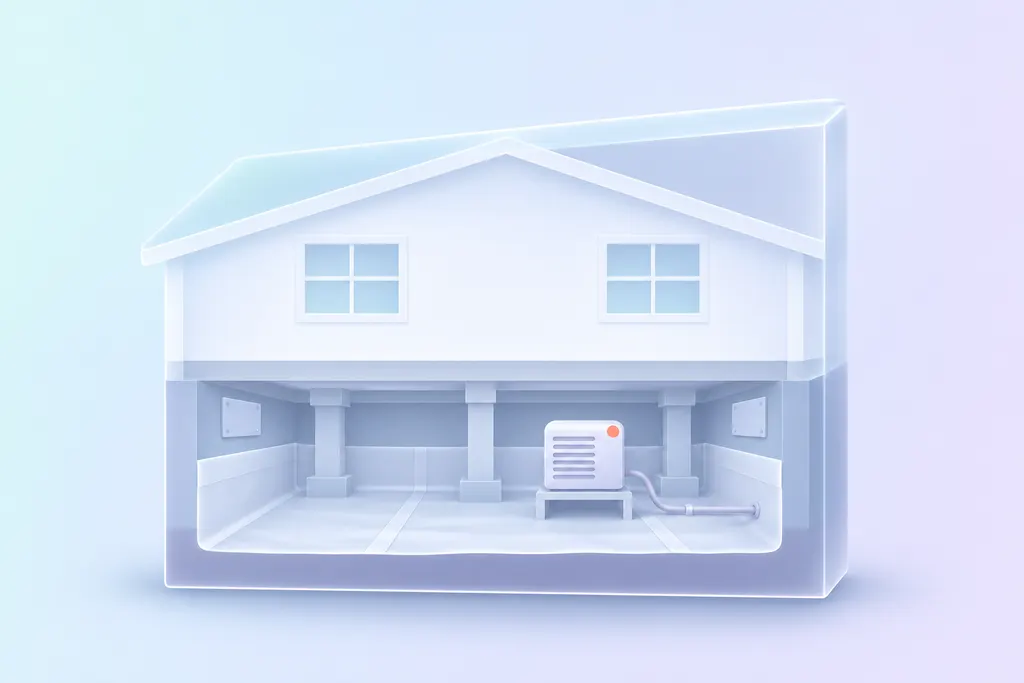
- Fixing water first. Any pooling water, leaks or drainage problems are dealt with before anything is sealed. The Department of Energy’s guide for existing crawl spaces puts drainage ahead of moisture control. If water collects under your house, start with standing water in a crawl space.
- Cleanup. Old plastic, debris and wet or fallen insulation come out.
- A liner on the ground and up the walls. Building America’s guide for sealed crawl spaces calls for at least 6-mil polyethylene, seams lapped (12 inches recommended; it notes the residential code minimum is 6 inches) and taped, and the liner carried up the walls to within about 4 inches of the top. In termite-prone areas it recommends leaving a strip of bare wall at the top so inspectors can see it. Contractors often use thicker, reinforced liners; Green Building Advisor notes that thicker sheeting resists tearing better where people crawl or store things.
- Sealing vents and openings. Foundation vents are closed and sealed, and the access door is weather-stripped.
- A drying method. A sealed crawl space still needs a way to remove moisture. Building America describes the code options as a continuously running exhaust fan or a supply of conditioned air, and sizes them at a minimum of 1 cfm per 50 square feet of floor or 50 cfm, whichever is greater. Many contractors install a dehumidifier instead or as well.
- Insulation, if used. In a sealed crawl space the insulation usually goes on the walls rather than under the floor.
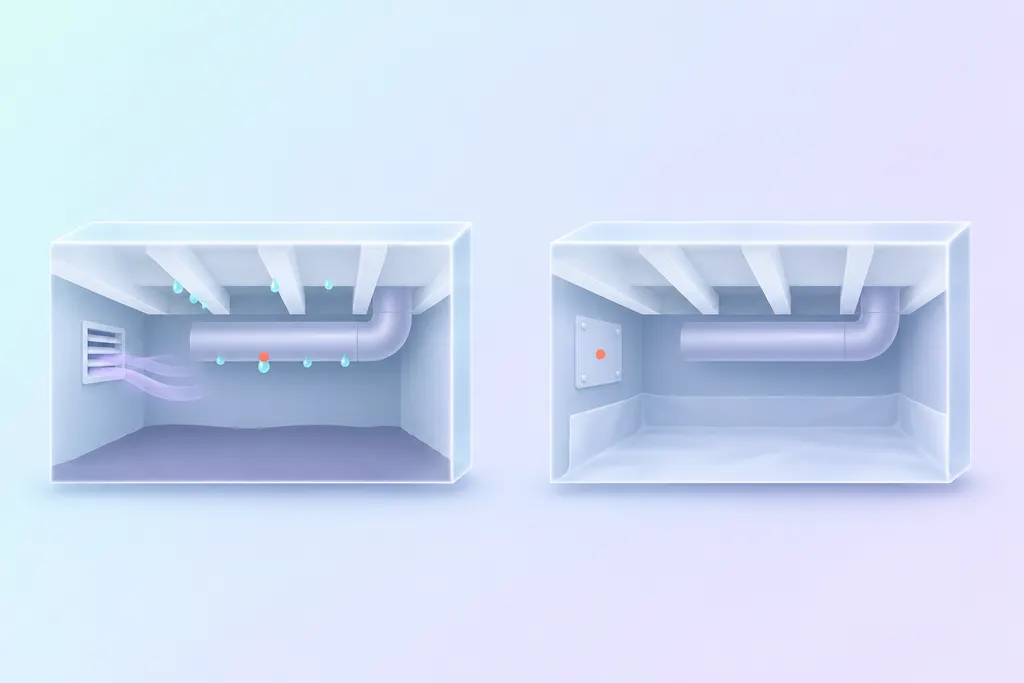
If you only want the ground cover, that is a different, smaller job; see crawl space vapor barrier cost.
Add-ons that change the price
These are the items that most often separate a $3,000 quote from a $12,000 one. Each source prices them differently.
Encapsulation add-ons: published ranges
Select a column heading to sort. National ranges, not quotes.
| Unit | ||||
|---|---|---|---|---|
| Crawl space dehumidifier with wiring | $800 | $2,000 | per unit | This Old House — Crawl space encapsulation cost · updated Mar 2026 · read Nov 2026 |
| Crawl space dehumidifier, installed | $800 | $1,200 | per unit | HomeGrail — Crawl space encapsulation cost · updated Jan 2026 · read Nov 2026 |
| Sump pump with installation (single figure) One source | $1,300 | $1,300 | per pump | HomeGrail — Crawl space encapsulation cost · updated Jan 2026 · read Nov 2026 |
| Drainage system One source | $600 | $1,800 | per project | This Old House — Crawl space encapsulation cost · updated Mar 2026 · read Nov 2026 |
| Sealing a foundation vent (HomeGrail: $15–$22) | $10 | $22 | per vent | This Old House — Crawl space encapsulation cost · updated Mar 2026 · read Nov 2026 |
| Sealed access door One source | $60 | $150 | each | This Old House — Crawl space encapsulation cost · updated Mar 2026 · read Nov 2026 |
| Mold removal | $500 | $4,000 | per project | This Old House — Crawl space encapsulation cost · updated Mar 2026 · read Nov 2026 |
| Permit, usually with inspection | $100 | $250 | per project | This Old House — Crawl space encapsulation cost · updated Mar 2026 · read Nov 2026 |
| Foundation repair, moderate problem One source | $2,000 | $7,000 | per project | This Old House — Crawl space encapsulation cost · updated Mar 2026 · read Nov 2026 |
- Dehumidifier. The biggest single add-on in most quotes. This Old House gives $800 to $2,000 installed with wiring; HomeGrail gives $800 to $1,200. It needs a dedicated circuit and a drain line, which a licensed electrician and plumber should handle.
- Drainage or a sump. Needed where water collects. This Old House gives $600 to $1,800 for a drainage system; HomeGrail gives about $1,300 for a sump with installation.
- Mold, pests and old materials. This Old House lists mold removal at $500 to $4,000. EPA’s homeowner cleanup advice covers patches under about 10 square feet; larger growth belongs with a mold remediation contractor. Asbestos found in old duct wrap or insulation should be left to a licensed abatement contractor; This Old House puts removal at $1,800 to $2,800.
- Structural repair. Rotted joists, failing piers or cracked foundation walls get fixed before the space is sealed. This Old House gives $2,000 to $7,000 for a moderate foundation problem. If floors sag or a wall bows, have a licensed structural engineer look first.
- Permits. Both This Old House and HomeGrail give $100 to $250, usually including the inspection.
Why quotes differ so much
- Scope. Some companies quote liner and vent sealing only; others bundle a dehumidifier, wall insulation and drainage. Compare line by line, not by the bottom number.
- Liner thickness. Heavier liners cost more to buy and to handle in a tight space. The building science guidance calls for at least 6 mil; anything thicker is a durability choice.
- Wall coverage. Carrying the liner up the walls adds material and sealing time.
- Access and condition. Low clearance, debris, pests and wet soil all add labor, and labor is most of the price.
- Region. National ranges hide local labor rates, which vary widely.
Before you compare quotes
Line items to get on every encapsulation quote
Ask each contractor for the same list so the quotes compare. Ticks stay in this browser only.
0 of 9 done
For whether the project pays back in comfort, moisture control and energy, see is crawl space encapsulation worth it. The leak path finder can help confirm whether your crawl space problem is humid air, ground moisture or water.
Questions people ask
How much does it cost to encapsulate a 1,000 sq ft crawl space?
This Old House gives $3,000 to $7,000 for that size. HomeGrail says a basic job without a sump or dehumidifier can be as low as $2,500. Add-ons and repairs push it higher.
How much does it cost to encapsulate a 2,000 sq ft crawl space?
Multiplying the per-foot rates gives $6,000 to $14,000 by This Old House’s basic rate and $4,000 to $12,000 by Fixr’s, before a dehumidifier, drainage or repairs. HomeGrail says spaces over 2,000 square feet with add-ons can reach $15,000 or more. See the 2,000 sq ft row in the size table.
Is a dehumidifier always part of encapsulation?
No, but a sealed crawl space needs some way to dry the air. The code options include an exhaust fan or conditioned air from the house; many contractors prefer a dedicated dehumidifier, which adds roughly $800 to $2,000.
Can I encapsulate a crawl space myself?
Laying and taping a liner is physically possible for some homeowners, but drainage, wiring for a dehumidifier or sump, mold cleanup and any structural repair are jobs for licensed professionals. Sealing a space that still takes on water makes the problem worse.
Does encapsulation cost more than a vapor barrier?
Yes. A vapor barrier is one part of encapsulation: the ground cover. Encapsulation adds wall coverage, sealed vents, a drying method and often insulation, which is why totals run several times higher.
Damp, musty crawl space?
Open the finder with a crawl space and summer dampness marked to see whether sealing the space, drainage or both fit your clues.
Pictures on this page are schematic drawings made with an AI image tool. They are not photos of any real basement, house, product, repair job or person.
Sources 8
- This Old House Crawl space encapsulation cost updated Mar 13, 2026 (opens in a new tab)
- HomeGrail How much does it cost to encapsulate a crawl space? updated Jan 9, 2026 (opens in a new tab)
- Fixr Crawl space repair cost updated Jan 31, 2025 (opens in a new tab)
- ThePricer How much does a crawl space vapor barrier cost? updated Oct 30, 2026 (opens in a new tab)
- U.S. DOE Building America Solution Center Unvented, Insulated Crawlspaces updated Sep 23, 2021 (opens in a new tab)
- U.S. DOE Building America Solution Center Water Management of Existing Crawlspace Floor updated Feb 9, 2015 (opens in a new tab)
- Green Building Advisor (Randy Williams) The most common vapor retarder for crawlspaces Aug 15, 2024 (opens in a new tab)
- U.S. EPA A Brief Guide to Mold, Moisture and Your Home read Nov 24, 2026 (opens in a new tab)
Figures were read on the dates shown. Prices are national ranges from cost guides, not quotes for your home.