Each foundation repair method answers a different problem. Piers carry a sinking footing down to firmer ground. Carbon fiber straps, wall anchors and helical tiebacks hold a basement wall that soil is pushing inward. Crack injection seals a leak but adds no strength. Choosing among them starts with knowing which movement you have, and that diagnosis belongs to a licensed structural engineer, not to the company that sells one of the systems. This page is general information, not an engineering opinion.
Match the method to the problem
| What the engineer finds | Method family | What it does not do |
|---|---|---|
| A thin, stable crack that leaks | Crack injection or sealing | Stop a wall or footing that is still moving |
| A corner or wall section sinking | Piers (helical or push) under the footing | Fix a wall that is bowing inward |
| A wall bowing inward, small amount | Carbon fiber or steel straps | Pull the wall back to plumb |
| A wall bowing inward, more movement | Wall anchors or helical tiebacks | Replace a wall that has failed |
| A wall too far gone to hold | Excavation and rebuilding | — |
Many houses need two things at once — for example, a drainage fix plus wall reinforcement — and the engineer’s report should say so. Wet soil is a common trigger for both settling and bowing; Today’s Homeowner names downspouts draining toward the house as a frequent cause of bowed walls.
Piers for a sinking footing
When part of a footing settles, a stair-step crack or a sloping floor is often the first sign. Piers transfer that part of the house onto deeper, firmer soil or rock. Crews reach the footing by digging along it outside or cutting through a slab, set a steel pier, attach it to the footing with a bracket, and use jacks to take the load.
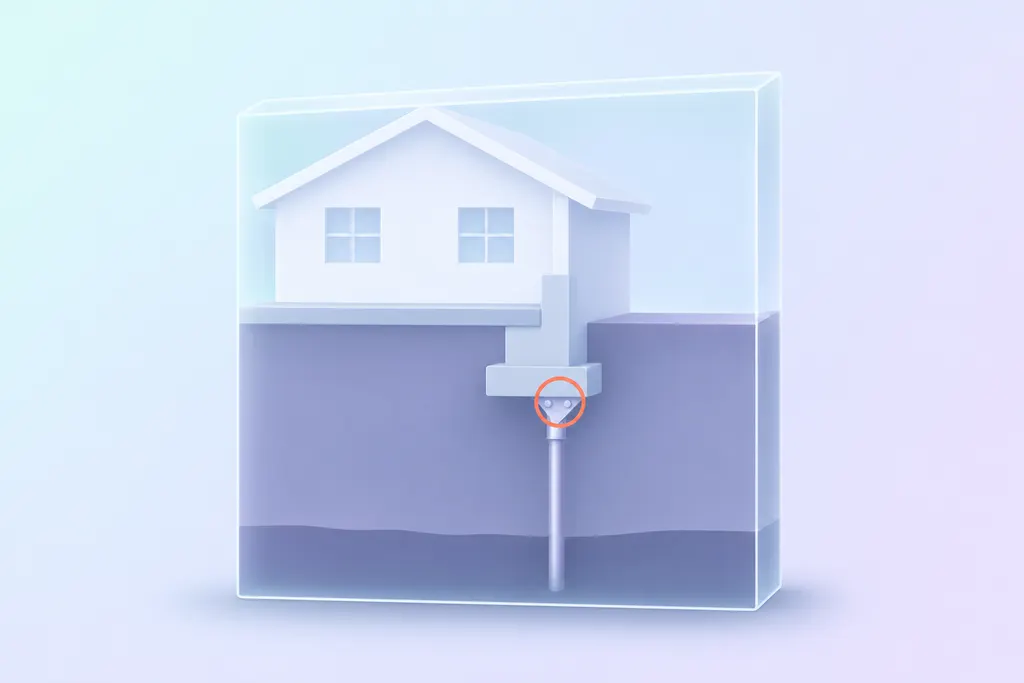
The two common steel types differ in how they go into the ground:
Settling footing: helical or push piers
Switch between the options to compare them point by point.
- How it goes in
- Screwed into the ground with hydraulic equipment until it reaches firm soil, then bracketed to the footing.
- Where it suits
- Deep or absent bedrock, sandy soil, and heavier structures.
- Typical job size
- Five to ten piers, per one guide.
- Published job price
- $15,000–$30,000 (one guide).
- How it goes in
- Steel sections driven straight down until they reach bedrock or a firm bearing layer, then bracketed to the footing.
- Where it suits
- Sites where solid bearing can be reached; one guide cites bedrock within about 200 feet.
- Typical job size
- Several piers along the settled section.
- Published job price
- $9,000–$15,000 (one guide).
Per pier, Fixr and This Old House both give $1,000–$3,000. Pier count, depth and spacing come from the engineer's design.
Today’s Homeowner says piers mainly stop further sinking and may lift the foundation back toward its original level; how much to lift, if at all, is the engineer’s design decision. It also notes that clay soil makes installation slower. Both Fixr and This Old House put a single pier at $1,000 to $3,000. Our stair-step crack guide covers how settling shows up in block walls.
Straps, anchors and tiebacks for a bowing wall
A wall that soil is pushing in usually shows a horizontal crack partway up, sometimes with stepped cracks running toward the corners. The three common ways to hold it differ in strength, digging and price.
Bowing wall: straps, anchors or tiebacks
Switch between the three wall methods. The engineer's measurements decide which one applies.
- How it works
- Strips bonded to the inside face with epoxy, fastened at the top and bottom of the wall.
- Bowing it is used for
- Small amounts of inward bow; the guides read for this page give no firm inch limit.
- Digging outside
- None — the work is done from the basement.
- Straightens the wall?
- No; it holds the wall where it is. Straightening is a separate, costlier job.
- Published price
- $85–$275 per foot of wall (one guide); $4,000–$12,000 for a set of strips (two guides).
- How it works
- A steel rod runs through the wall from a plate inside to an anchor plate buried in the yard, then is tightened.
- Bowing it is used for
- Under about 2 inches of bow, according to one cost guide.
- Digging outside
- Yes, for each outside plate, so yard space beside the wall matters.
- Straightens the wall?
- Holds the wall; any gradual straightening is the installer's and engineer's call.
- Published price
- $80–$150 per foot of wall, anchors about every 5 feet (one guide).
- How it works
- A screw-shaped steel shaft is turned through the wall into firm soil outside and tightened to a set torque.
- Bowing it is used for
- More than about 2 inches of bow, according to one cost guide.
- Digging outside
- Little or none; the shaft is driven from inside, but it needs open soil beyond the wall.
- Straightens the wall?
- Holds the wall; tightening can improve the bow but full straightening is a separate step.
- Published price
- $300–$360 per foot (one guide); $1,500–$2,000 each or $5,000–$15,000 per job (Fixr).
Summarized from Today's Homeowner, Fixr, This Old House and Concrete Network. General information, not an engineering opinion.
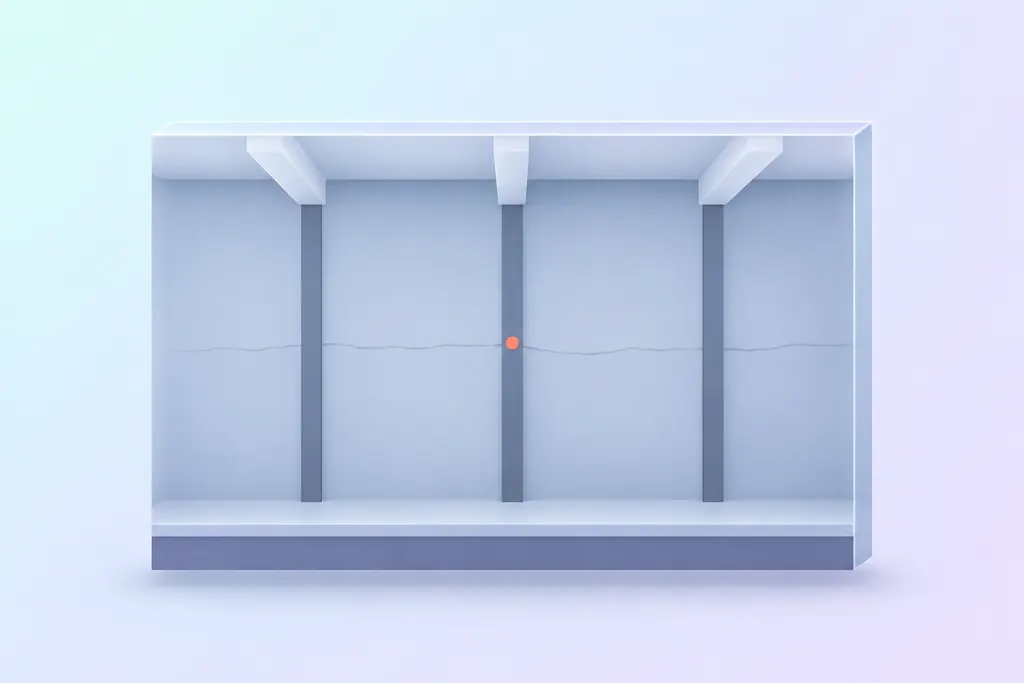
Carbon fiber straps are bonded to the inside face of the wall. Concrete Network stresses that a strap system is only as good as its connections: the straps have to be tied to the footing at the bottom and to the house framing at the top. It also warns against reinforcing only the most-bowed spot, because the load simply shifts to the next weak point — so straps are set along the whole affected wall, roughly every 4 feet according to Today’s Homeowner.
Wall anchors pair a plate on the inside of the wall with a plate buried in the yard, joined by a steel rod that is tightened. Today’s Homeowner places them about every 5 feet and associates them with bowing under about 2 inches. They need open yard beside the wall; a driveway, patio or property line close to the house can rule them out.
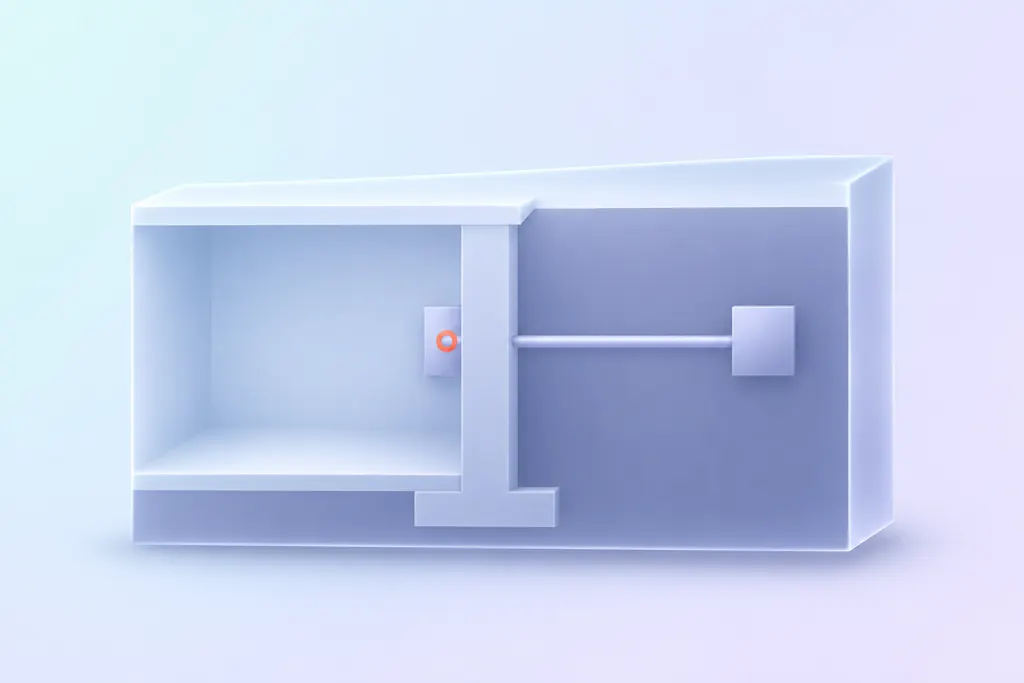
Helical tiebacks are screw-shaped shafts turned through the wall into firm soil outside and tightened to a set torque. The same guide uses them for bowing beyond about 2 inches and calls more than 4 inches a major problem.
None of these methods straightens a wall on its own. Today’s Homeowner treats straightening as a separate, costlier service at $335 to $550 per foot. A wall that has moved too far, or an unreinforced block wall that is badly buckled, may need to be excavated and rebuilt; InspectAPedia warns that severely buckled unreinforced masonry walls can collapse suddenly, and that temporary wood bracing is only a stop-gap.
If a basement wall is visibly bulging or leaning, stay out from beside it, keep heavy items away from it, and get an engineer out promptly. Do not dig along the outside of a bowing wall or try to brace or jack it yourself.
Crack injection: a water fix, not a structural one
Injecting epoxy or polyurethane into a crack fills the path water takes through a poured concrete wall. Fixr gives $200 to $1,000 per crack and This Old House $250 to $800. It is the right call for a thin, stable crack that leaks — and the wrong one for a crack that is still opening, because the wall keeps moving and the crack reopens beside or through the repair. Our crack check helps sort one from the other.
Costs side by side
Per-foot figures for wall reinforcement come from one guide; whole-job figures come from Fixr and This Old House. Use the table to see the scale of each method, then let the engineer’s scope and local bids set the real number. The foundation repair cost guide explains what moves the total.
Repair methods: published price ranges
Select a column heading to sort. National ranges, not quotes.
| Unit | ||||
|---|---|---|---|---|
| Crack sealing or injection | $200 | $1,000 | per crack | Fixr — Foundation repair cost · updated Jan 2026 · read Nov 2026 |
| Crack filling (epoxy, polyurethane or hydraulic cement) | $250 | $800 | per crack | This Old House — How much does foundation repair cost? · updated Oct 2026 · read Nov 2026 |
| Foundation pier | $1,000 | $3,000 | per pier | Fixr — Foundation repair cost · updated Jan 2026 · read Nov 2026 |
| Piering or underpinning | $1,000 | $3,000 | per pier | This Old House — How much does foundation repair cost? · updated Oct 2026 · read Nov 2026 |
| Steel push piers, typical job One source | $9,000 | $15,000 | per project | Today's Homeowner — How much do helical piers cost? · updated May 2025 · read Nov 2026 |
| Helical piers, typical job (5 to 10 piers) One source | $15,000 | $30,000 | per project | Today's Homeowner — How much do helical piers cost? · updated May 2025 · read Nov 2026 |
| Carbon fiber or steel straps One source | $85 | $275 | per linear foot | Today's Homeowner — Bowing basement wall repair costs · updated May 2025 · read Nov 2026 |
| Carbon fiber reinforcement strips | $4,000 | $12,000 | per project | Fixr — Foundation repair cost · updated Jan 2026 · read Nov 2026 |
| Steel or carbon fiber strips (set of 12) | $4,000 | $12,000 | per project | This Old House — How much does foundation repair cost? · updated Oct 2026 · read Nov 2026 |
| Wall anchors One source | $80 | $150 | per linear foot | Today's Homeowner — Bowing basement wall repair costs · updated May 2025 · read Nov 2026 |
| Helical tiebacks One source | $300 | $360 | per linear foot | Today's Homeowner — Bowing basement wall repair costs · updated May 2025 · read Nov 2026 |
| Helical tieback One source | $1,500 | $2,000 | each | Fixr — Foundation repair cost · updated Jan 2026 · read Nov 2026 |
| Helical tiebacks, whole job One source | $5,000 | $15,000 | per project | Fixr — Foundation repair cost · updated Jan 2026 · read Nov 2026 |
Questions to ask before choosing a method
- What movement did you find — settling, bowing, or both — and how much?
- Why this method rather than the others, for this wall and this soil?
- How many piers, straps or anchors, at what spacing, and to what depth or torque?
- Does the plan include fixing the water that caused the movement?
- Will an engineer inspect the finished work and put the result in writing?
Questions people ask
Are carbon fiber straps as strong as wall anchors?
They do different jobs. Straps resist further bending from inside the wall and suit modest bowing; anchors and tiebacks tie the wall back to the soil outside and are used where more movement has occurred. Your engineer’s measurements decide which is enough.
Helical piers or push piers — which is better?
Neither in general. Helical piers suit deep or missing bedrock, sandy soil and heavier loads; push piers suit sites where they can be driven to solid bearing. Soil information, often a soil report, settles the choice.
Can a bowed wall be pushed back to straight?
Sometimes, as a separate step after the wall is secured, and usually at a higher price. Many walls are simply held where they are.
Do I need to fix drainage too?
Usually. Water against the wall is a common cause of bowing and settling. The leak path finder shows gutter, grading and drain fixes with their price ranges.
Pictures on this page are schematic drawings made with an AI image tool. They are not photos of any real basement, house, product, repair job or person.
Sources 6
- Today's Homeowner Bowing basement wall repair costs updated May 28, 2025 (opens in a new tab)
- Today's Homeowner How much do helical piers cost? updated May 22, 2025 (opens in a new tab)
- Concrete Network Repairing bowed basement walls read Nov 24, 2026 (opens in a new tab)
- Fixr How much does foundation repair cost? updated Jan 27, 2026 (opens in a new tab)
- This Old House How much does foundation repair cost? updated Oct 8, 2026 (opens in a new tab)
- InspectAPedia Horizontal foundation cracks read Nov 24, 2026 (opens in a new tab)
Figures were read on the dates shown. Prices are national ranges from cost guides, not quotes for your home.