A sump pump that runs nonstop is either keeping up with a lot of groundwater or failing to finish its job. During and after long rain or snowmelt, steady running can be normal. If it keeps going for days after the ground should have drained, or it cycles every minute or two, the usual suspects are a float switch stuck in the “on” position, a failed check valve letting pumped water fall back into the pit, a discharge line that is blocked or frozen, or a pump too small for the inflow. Most of these you can spot from a dry spot without touching anything; the repairs themselves belong to a plumber, and Fixr puts a typical one at $150 to $500.
First, is it actually a problem?
Pumps are built to cycle, not to run without a break. Pentair’s FAQ says sump pumps are meant to run intermittently and warns that continuous running can overheat and wear out the motor. But when the water table is high, the pit really does refill fast. NDSU Extension notes that water keeps entering a basement as long as the water table stays above the floor, and a drain system is designed to collect exactly that water.
So the first question is simple: is water pouring into the pit? If you can see a stream from the drain pipes entering the pit and the pump empties it each time, the pump is doing its job and the real issue is how much water is reaching the foundation. If the pit fills even though little water is coming in, or the pump hums while the level barely moves, something in the system has failed.
What the running tells you
Switch between the options to compare them point by point.
- What you see
- A clear stream entering from the drain pipes; the pump empties the pit each cycle.
- Likely cause
- High groundwater after rain or thaw.
- What to do
- Check gutters, downspouts and grading; consider a backup pump; watch it ease as the ground drains.
- What you see
- Short cycles, water rushing back when it stops, or water staying put after the pump shuts off.
- Likely cause
- Failed check valve, or discharge water draining back toward the house.
- What to do
- Have a plumber check the valve and the discharge route.
- What you see
- Pump keeps going, sucking air or rattling, or hums without moving water.
- Likely cause
- Stuck float switch, jammed impeller or blocked or frozen discharge.
- What to do
- Call a plumber soon; a pump running dry can overheat.
Safe things to look at
Look, do not touch. Never reach into the pit, handle the pump, its cord or float, or unplug anything while there is water on the floor or you are standing in it. If water is near the outlet or the panel, have the power shut off by your utility or a licensed electrician. CDC flood guidance says no one should operate switches or electrical equipment while standing in water.
Look from a dry spot: what is the pump doing?
Only observe. Tick each check as you make it; ticks stay in this browser.
0 of 7 done

The usual causes
1. High groundwater. After weeks of rain or a fast thaw, a pump may run for long stretches and still be healthy. Bob Vila’s guide lists a rising water table and melting snow among the common reasons a pump keeps going on dry days. The tell is that the running tracks the weather and slows as the ground drains.
2. A stuck float switch. The float is what tells the pump to start and stop. If it hangs on the pit wall, the pump cord or debris, the pump keeps running even after the pit is empty. That is when you hear the pump sucking air or rattling. A plumber can clear or replace it; Fixr lists float switch repair at $75 to $125 and a new float switch at $100 to $150.
3. A failed or missing check valve. The check valve sits on the discharge pipe just above the pump and stops the water in the pipe from dropping back into the pit when the pump shuts off. Without it, every cycle sends a column of water straight back down, the float rises again, and the pump restarts. Home inspector Reuben Saltzman counts a missing check valve among the five sump defects he keeps finding at inspections. Watch the pit as the pump stops: a gush of water returning and the level jumping back up is the sign.
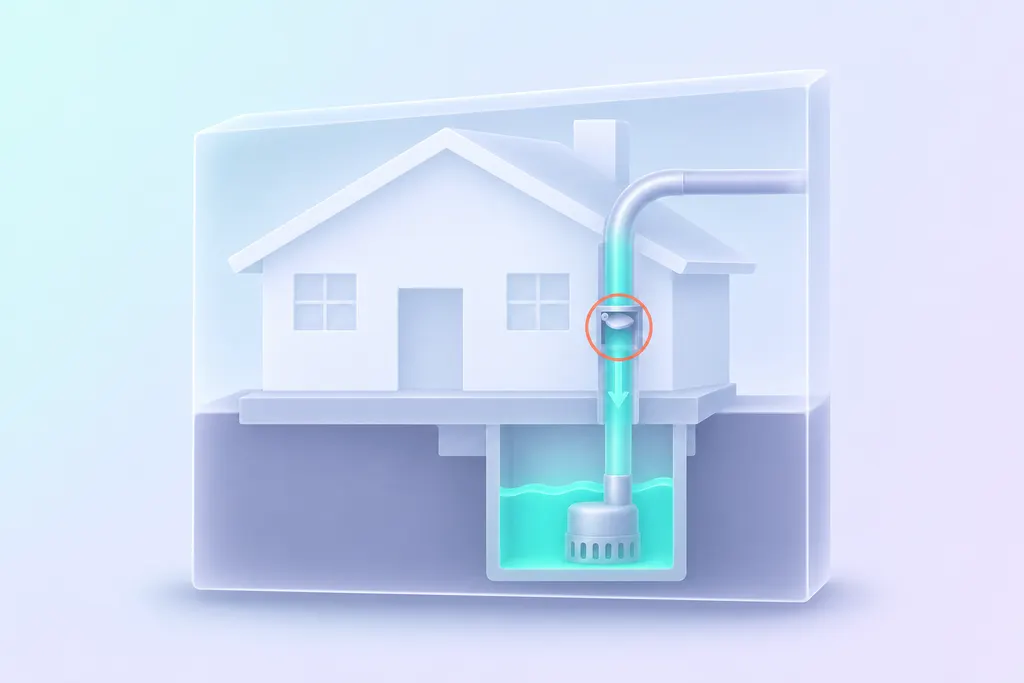
4. A blocked, frozen or undersized discharge line. If the water cannot leave freely, the pump runs longer to move the same amount. Saltzman describes ice in an outdoor discharge line leaving his own pump running nonstop without moving any water, and notes that running the discharge through a garden hose can cut a pump’s capacity by more than 80%.
5. Water that comes straight back. A discharge that empties next to the house, or onto ground sloping toward it, sends the same water back down to the drain tile. The pump ends up moving it in a loop. The line should end where water drains away from the building.
6. A pump that is too small or worn out. An undersized pump can run nonstop in a wet season, and an old one may simply have lost power. Sources disagree sharply on lifespan: Pentair says most pumps last 3 to 5 years, while Bob Vila’s guide says about 7 to 10. If yours is near either range and struggling, replacement is a reasonable conversation.
When to call a plumber
Call one if the pump runs with the pit empty, if water drops back into the pit every time it stops, if the motor hums but no water leaves, if the pump is hot or smells of burning, or if it trips its circuit. Any of these can end with a burned-out motor at the worst moment, often in the middle of a storm. If the pit is overflowing or water is spreading across the floor, treat it as urgent, and keep clear of the water while power is on.
If the pump is healthy and simply overwhelmed, the fix is less water reaching the foundation, not a bigger pump alone. Gutters, downspouts and grading come first; after that, see water coming up through the basement floor and the French drain cost guide. The leak path finder can help you map where the water is coming from.
Repair and replacement costs
Fixr’s repair guide is the only readable source we found with part-by-part prices, so treat each row below as one guide’s estimate. The guide itself gives slightly different figures for some parts in its tables and its text; we show the wider span.
Sump pump repairs and replacement: published ranges
Select a column heading to sort. National ranges, not quotes.
| Unit | ||||
|---|---|---|---|---|
| Repair for a pump that runs constantly One source | $150 | $500 | per repair | Fixr — Sump pump repair cost · updated Jan 2025 · read Nov 2026 |
| Float switch replacement One source | $100 | $150 | each | Fixr — Sump pump repair cost · updated Jan 2025 · read Nov 2026 |
| Check valve replacement One source | $100 | $200 | each | Fixr — Sump pump repair cost · updated Jan 2025 · read Nov 2026 |
| Discharge pipe replacement One source | $175 | $600 | per job | Fixr — Sump pump repair cost · updated Jan 2025 · read Nov 2026 |
| Motor replacement One source | $250 | $500 | each | Fixr — Sump pump repair cost · updated Jan 2025 · read Nov 2026 |
| Whole pump replacement (repair guide) One source | $700 | $1,600 | per pump | Fixr — Sump pump repair cost · updated Jan 2025 · read Nov 2026 |
| Replacing an existing sump pump | $350 | $1,000 | per pump | Fixr — Sump pump installation cost · updated Jan 2025 · read Nov 2026 |
| Battery backup pump | $150 | $2,000 | each | Fixr — Sump pump installation cost · updated Jan 2025 · read Nov 2026 |
What changes the bill:
- After-hours calls. Fixr’s $100 to $200 emergency surcharge is a large share of a small repair, so a weekday visit costs noticeably less if the pump is still coping.
- Repair or replace. On an older pump, a new motor at $250 to $500 is close enough to a whole replacement that many owners choose the new pump.
- Backup. A battery backup pump keeps water moving when power fails or the main pump quits. Fixr’s range of $150 to $2,000 covers everything from basic units to larger systems.
- New pit or circuit. A swap in an existing pit is the cheap case; anything that needs a new pit or wiring is an installation job. See the sump pump installation cost guide.
If the drain system feeding the pump is the real problem, the choice of interior or exterior drainage is laid out in interior vs. exterior waterproofing.
Questions people ask
How often should a sump pump cycle?
There is no single right number. It depends on how fast water enters the pit and how big the pit is; Pentair says most basins hold 18 to 25 gallons. Frequent cycling in a storm is normal. Cycling every minute or two on dry days is not.
Is it bad if my sump pump runs every few minutes with no rain?
It deserves a look. Check whether water flows back into the pit when the pump stops, which points to the check valve, and whether water is still entering from the drain pipes, which points to groundwater.
Can a sump pump burn out from running too much?
Yes. Pentair warns that continuous running can overheat a pump and shorten its life, which is why a stuck float or blocked discharge should be fixed quickly rather than left running.
Why does my sump pump run when the ground is frozen?
Snowmelt and thaw can feed groundwater even without rain. But if the outdoor discharge line is frozen, the water has nowhere to go and the pump can run continuously; that needs attention before the motor overheats.
Pump never stops?
Open the finder with a nonstop pump and long-rain water marked to see where the water is likely coming from and what the fixes cost.
Pictures on this page are schematic drawings made with an AI image tool. They are not photos of any real basement, house, product, repair job or person.
Sources 7
- Fixr Sump pump repair cost updated Jan 31, 2025 (opens in a new tab)
- Fixr Sump pump installation cost updated Jan 31, 2025 (opens in a new tab)
- Structure Tech Home Inspections (Reuben Saltzman) Five Common Sump System Defects Aug 15, 2023 (opens in a new tab)
- Pentair Sump Pump Info FAQ read Nov 24, 2026 (opens in a new tab)
- Bob Vila Why is my sump pump running without rain? modified Jan 27, 2023 (opens in a new tab)
- NDSU Extension Flood Recovery: Dealing with Continuing Basement Seepage, DE1570 reviewed April 2023 (opens in a new tab)
- CDC Safety Guidelines: Reentering Your Flooded Home updated Aug 24, 2026 (opens in a new tab)
Figures were read on the dates shown. Prices are national ranges from cost guides, not quotes for your home.